What Temperature Should You Set Your Boiler To?
Most homeowners rarely change the temperature settings on their boiler once it has been installed.
However, the temperature your boiler uses for your central heating can affect how quickly the property warms up and how efficiently a modern heating system operates.
Understanding the difference between your boiler temperature and your room thermostat can also help you avoid simply turning everything up whenever the house feels cold.
Quick Answer
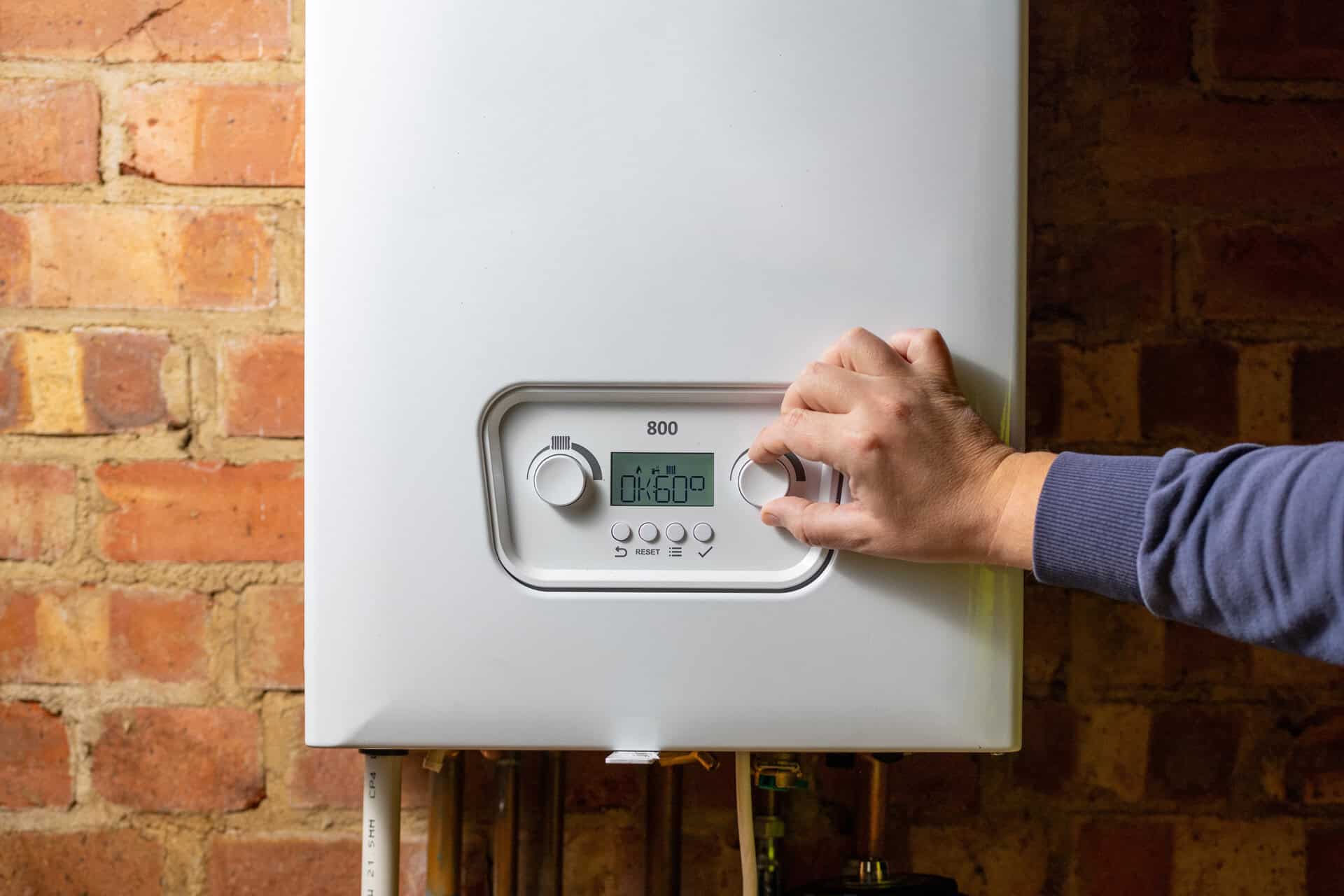
For many modern condensing combi boilers, a central heating flow temperature of around 60°C can be a sensible starting point.
However, there is no single temperature that is perfect for every home. The best setting depends on the property, insulation, radiator sizes, outdoor temperature and design of the heating system.
What does the temperature setting on your boiler actually control?
One of the biggest areas of confusion is the difference between your boiler flow temperature and the temperature shown on your room thermostat.
They do different jobs.
The room thermostat tells the heating system how warm you want your home to become.
For example, if your thermostat is set to 20°C, the central heating will normally continue operating until the thermostat detects that the room has reached approximately that temperature.
The boiler flow temperature controls how hot the water leaving the boiler becomes before travelling through the central heating system and into your radiators.
You can therefore have a thermostat set to 20°C while the boiler itself is heating the central heating water to a much higher temperature.
What temperature should a combi boiler be set to?
For many modern condensing combi boilers, setting the central heating flow temperature somewhere around 60°C can provide a useful starting point.
Some boilers are set considerably higher, particularly when their settings have never been adjusted since installation.
Reducing the flow temperature may help a modern condensing boiler operate more efficiently, provided the heating system can still keep the property comfortable.
The important point is that 60°C should not be treated as a fixed rule.
Some homes may work well at a lower temperature, while others may require hotter water, particularly during colder weather.
Why does boiler flow temperature affect efficiency?
Most modern gas boilers are condensing boilers.
They are designed to recover additional heat from the gases produced during combustion rather than allowing all of that energy to escape through the flue.
The heating system can generally make better use of this process when the water returning to the boiler is cooler.
If a boiler is constantly operating at unnecessarily high central heating temperatures, it may spend less time working in its most efficient operating conditions.
Lowering the flow temperature where appropriate can therefore help a modern boiler make better use of the gas it consumes.
Does a lower boiler temperature mean a colder house?
Not necessarily.
The boiler flow temperature determines how hot your radiators become, while the thermostat determines the target room temperature.
Reducing the flow temperature normally means the radiators will feel less hot to the touch and the house may take a little longer to warm up.
If the heating system is correctly designed and sized, however, it may still be perfectly capable of reaching the temperature set on the thermostat.
The aim is therefore not to make the boiler temperature as low as possible.
You are looking for the lowest practical setting that still allows the property to become comfortably warm.
What happens if you set the boiler temperature too low?
If the central heating flow temperature is too low for your property, the heating may struggle to bring rooms up to temperature.
You may notice:
- The house takes a very long time to warm up
- The thermostat temperature is rarely reached
- Rooms feel cold during particularly low outdoor temperatures
- The boiler appears to run for long periods without achieving the required room temperature
If this happens after reducing the flow temperature, try making a modest adjustment rather than immediately returning it to the maximum setting.
If the property still struggles to warm up, there may also be another issue with the heating system.
Should you just turn the boiler temperature to maximum?
Not usually.
Increasing the boiler flow temperature will normally make the radiators hotter and may help the house warm up more quickly.
However, a higher setting is not automatically better.
If your home is already reaching the desired temperature comfortably, running the boiler significantly hotter than necessary may simply reduce its efficiency.
If the boiler needs to be kept at a very high setting just to make the property comfortable, it may be worth checking whether the radiators, heating controls or wider system are performing properly.
Does the weather make a difference?
Yes.
The amount of heat your home loses increases as the outdoor temperature drops.
A boiler flow temperature that comfortably heats the house during mild autumn weather may not necessarily provide enough heat during a particularly cold winter period.
This is one reason there is no single ideal boiler temperature that works for every household throughout the year.
Some more advanced heating controls can automatically alter the heating temperature according to outdoor conditions, but many homes still rely on a fixed boiler setting.
Is your boiler temperature the same as your hot water temperature?
No.
Most combi boilers allow the central heating and domestic hot water temperatures to be adjusted independently.
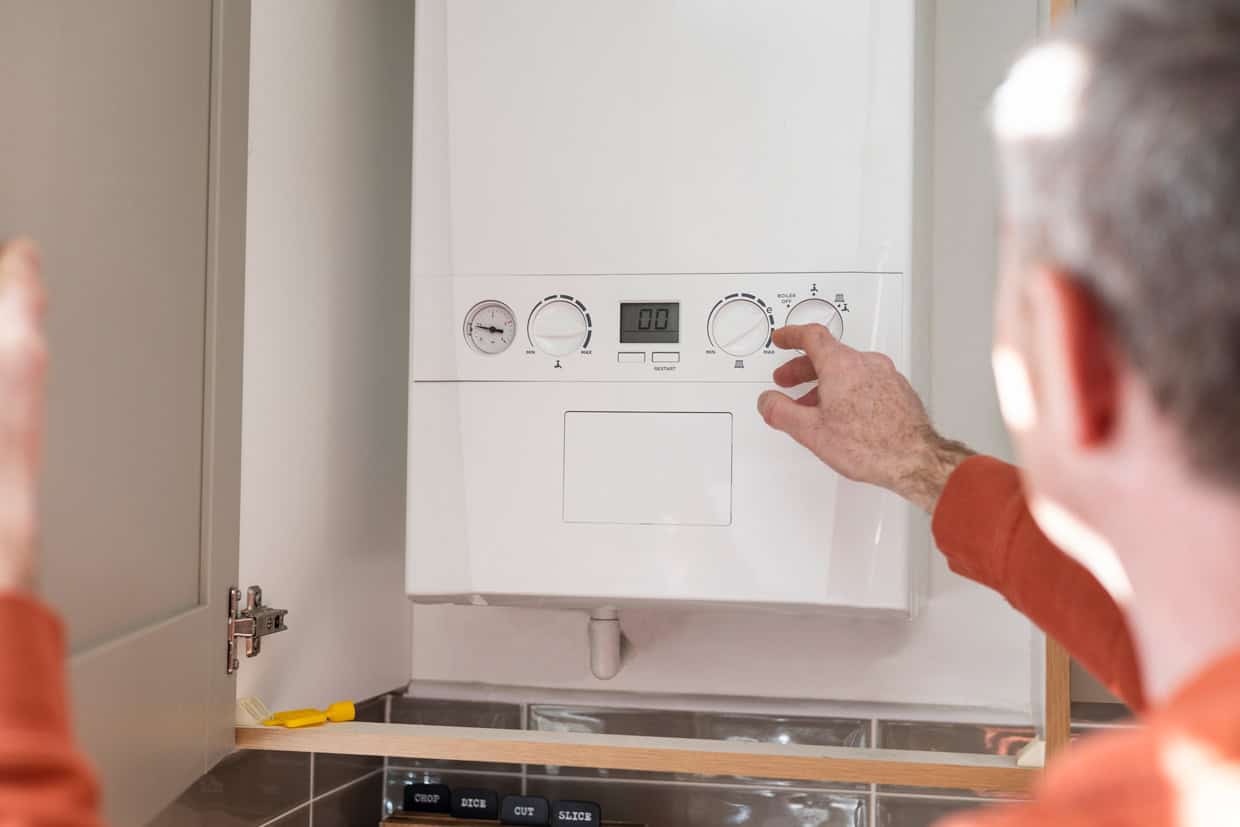
You will often see two separate controls:
- A radiator symbol for the central heating temperature
- A tap symbol for the hot water temperature
If you are experimenting with the central heating flow temperature, make sure you are adjusting the correct control.
If you are unsure, check the manufacturer's instructions for your boiler before making any changes.
What if you have a system or regular boiler?
The advice above is mainly aimed at homes with modern combi boilers.
A system or regular boiler will usually work alongside a separate hot water cylinder.
This means changing the boiler temperature can also have implications for how stored hot water is heated.
For that reason, you should not automatically apply the same settings used on a combi boiler to a different type of heating system.
If you have a hot water cylinder and are unsure which settings are appropriate, ask a qualified heating engineer before making significant changes.
What if the radiators are still not getting hot?
If one or more radiators remain cold, simply increasing the boiler temperature may not solve the underlying problem.
Radiator issues can be caused by several things, including:
- Trapped air
- Poor system balancing
- Circulation problems
- Sticking valves
- Debris or sludge within the system
If only one radiator is affected while the others are working normally, the problem is particularly unlikely to be the main boiler temperature.
Home Heating Experts provides central heating repairs in Derby if your heating system needs further investigation.
Could your heating controls be more important?
The flow temperature is only one part of how your heating system operates.
Your thermostat and heating controls determine when the heating runs and what temperature you are trying to maintain.
Depending on the heating system, controls may include:
- A programmable room thermostat
- Thermostatic radiator valves
- Smart heating controls
- Different heating schedules
If your boiler is relatively modern but the controls are old or difficult to use, improving the controls may make the system easier to manage.
It can also help avoid heating the property unnecessarily when nobody is home.
Why radiator size matters
The size and output of the radiators throughout your home can influence how low you can comfortably set the boiler flow temperature.
A radiator needs to release enough heat to replace the heat being lost from the room.
If the radiators are relatively small, they may need hotter water to provide enough heat during cold weather.
Larger or appropriately sized radiators may be capable of heating a room using a lower flow temperature.
This is one reason heating engineers consider the full system rather than concentrating solely on the boiler itself.
If your radiators are old, poorly positioned or no longer suitable for the room, Home Heating Experts provides radiator installation and relocation in Derby.
What if your boiler keeps turning on and off?
A boiler repeatedly firing up and shutting down over short periods can sometimes indicate that the heating system is not operating as effectively as it should.
There are several possible causes, and changing the flow temperature alone may not resolve them.
If the boiler has recently started behaving differently, or you are also experiencing pressure problems, unusual noises or inconsistent heating, it is worth having the system checked rather than continually changing the settings.
When should you call a heating engineer?
It is worth asking for professional advice if:
- Your home struggles to reach the thermostat temperature
- The boiler has become unreliable
- Your radiators heat unevenly
- Some rooms remain significantly colder than others
- The boiler frequently switches on and off
- You are unsure which settings you should adjust
- Your heating bills appear unusually high
Sometimes the solution is a straightforward adjustment, but the symptoms can also point to a fault or issue elsewhere in the central heating system.
Don't forget regular boiler servicing
Optimising your boiler settings can help you get more from your heating system, but it does not replace regular maintenance.
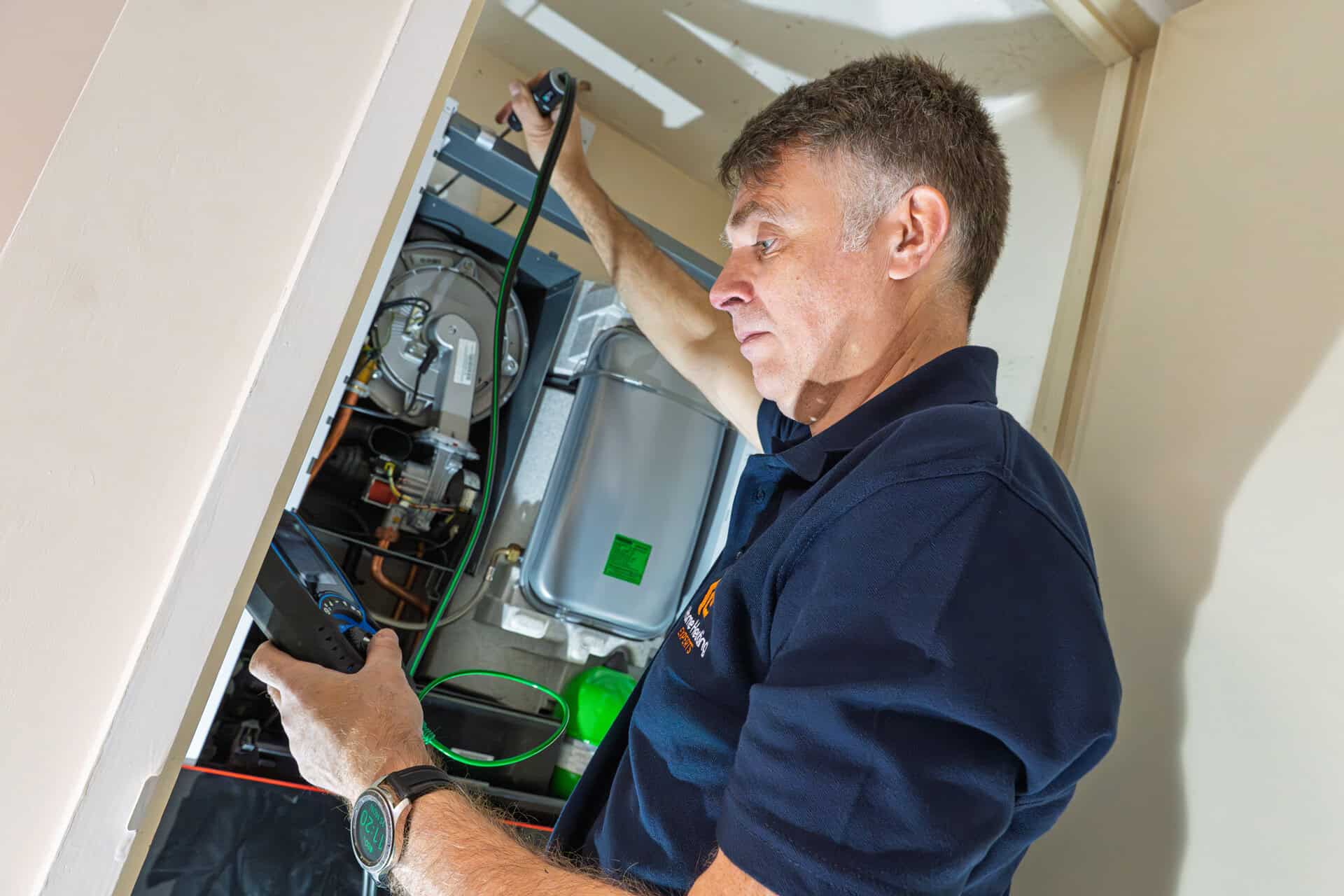
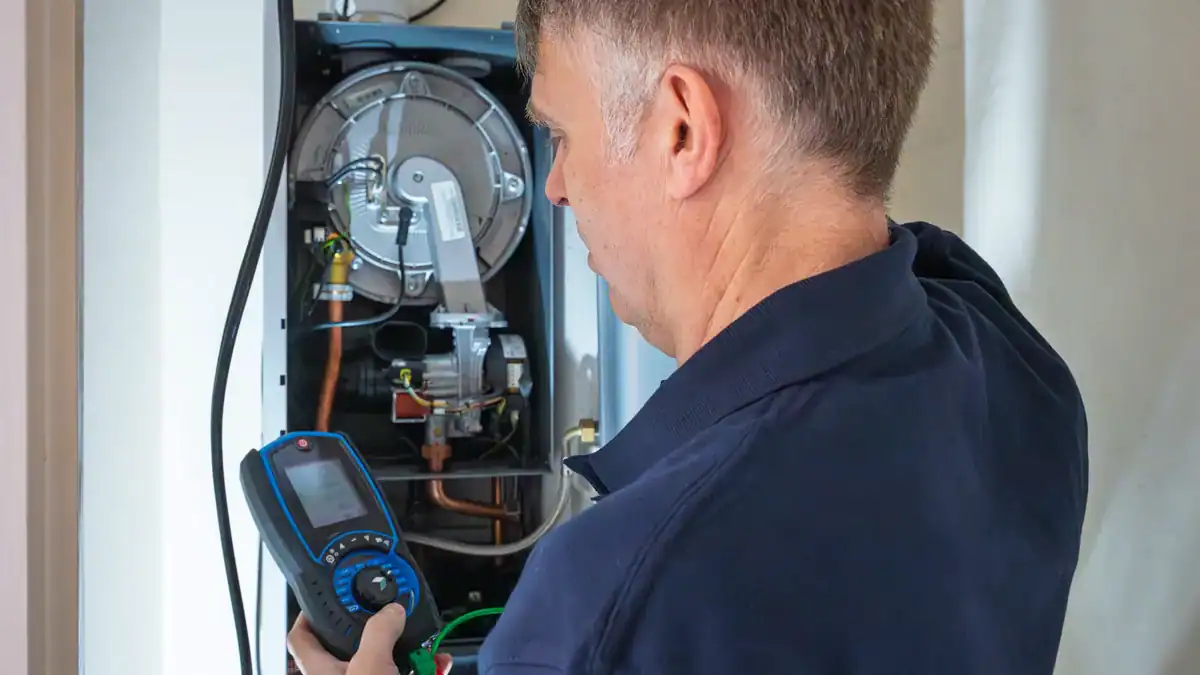
An annual boiler service gives a Gas Safe registered engineer the opportunity to inspect the boiler, check its operation and identify potential problems before they develop into larger faults.
You can find out more about boiler servicing in Derby from Home Heating Experts.
Final Thoughts
For many modern combi boilers, a central heating flow temperature of around 60°C can be a useful place to start.
If the property remains comfortable, it may be possible to reduce the temperature further. If rooms struggle to reach the thermostat setting, the boiler may need to run hotter or there may be another issue within the heating system.
The key is finding a balance between comfort and efficiency rather than simply leaving the boiler on its highest setting.
If your home is taking too long to warm up, your radiators are not performing properly or you are unsure whether your boiler is working as effectively as it should, contact Home Heating Experts for straightforward advice and a no-obligation quote.