Signs of a Hidden Water Leak in Your Home and What to Do Next
A hidden water leak can cause serious damage long before you see a drip. Water can travel along pipework, soak into floors and walls, and only show itself weeks later as a stain, a musty smell or a higher water bill.
This guide explains the most common signs of a hidden leak, a simple check you can do with your water meter, and what to do next if you think water is escaping somewhere in your home.
Quick answer
The most common signs of a hidden water leak are damp patches or staining on walls and ceilings, a musty smell, mould appearing in one area, lower water pressure, a boiler that keeps losing pressure, and a water meter that keeps moving when no water is being used. If you notice any of these, check your water meter, turn off the stop tap if water is escaping, and arrange for a plumber to find the source.
Common signs of a hidden water leak
Damp patches, stains and bubbling paint
Brown or yellow marks on a ceiling, damp patches low down on a wall, or paint and wallpaper that bubbles or peels are often the first visible signs. A stain on a ceiling below a bathroom is a classic warning sign of a leak from a toilet, shower or the pipework under the bath.
A musty smell or new mould
Mould that appears in one specific area, rather than as general condensation, can point to water getting into the building fabric. A persistent damp, musty smell in a cupboard or under a sink is worth investigating.
Lower water pressure
If taps and showers suddenly run weaker than usual, water may be escaping before it reaches them. This is especially worth checking if the change affects the whole house.
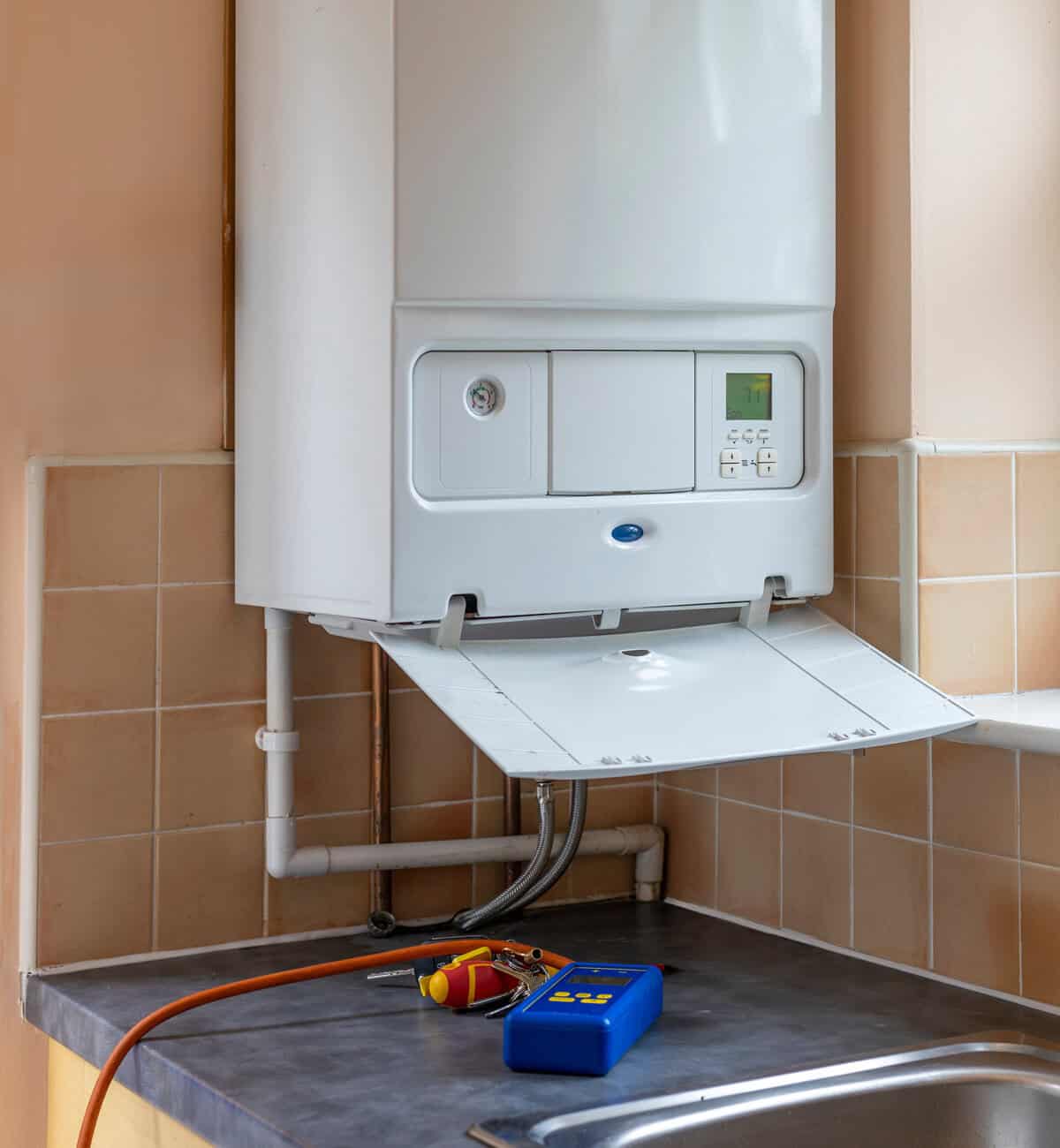
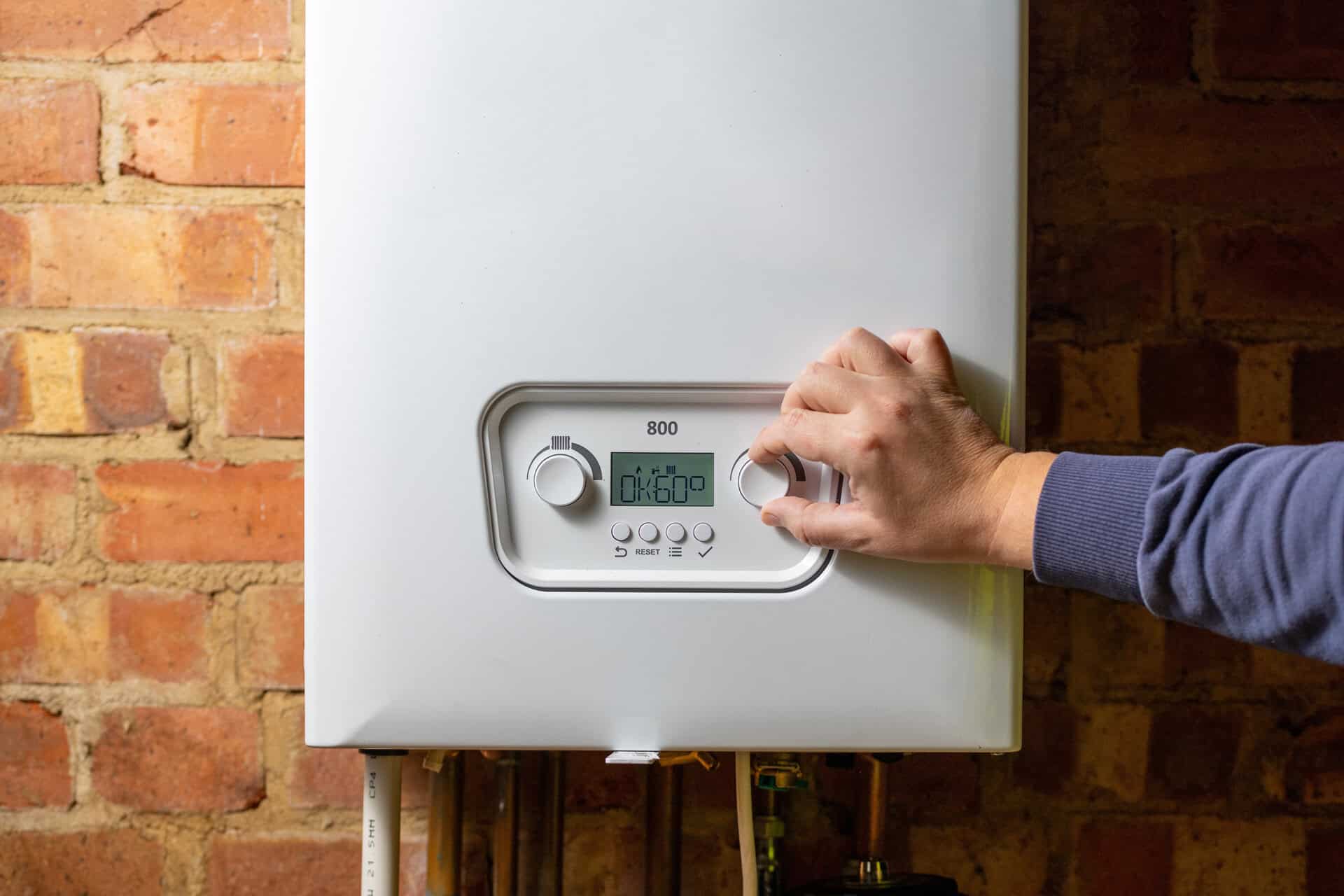
Your boiler keeps losing pressure
On a sealed heating system, a pressure gauge that keeps dropping and needs topping up is often caused by a leak on the heating pipework, a radiator valve or the boiler itself. Our guide on why a boiler keeps losing pressure explains the other possible causes.
Sounds of running water
Hearing water running or hissing when every tap is off can mean water is moving through a leaking pipe or a fitting that is not sealing properly, such as a toilet that keeps refilling.
Warm spots, lifting floors or cracked tiles
Heating pipework often runs under floors. A leak there can cause a warm patch on the floor, flooring that lifts or swells, or loose and cracked tiles.
A higher water bill
If you are on a water meter and your bill rises without any change in how you use water, a leak is one of the first things to rule out.
How to check for a leak using your water meter
If you have a water meter, this simple test can help confirm whether water is escaping somewhere on your supply.
- Make sure nobody uses any water and that appliances such as washing machines and dishwashers are not running.
- Find your water meter and write down the reading, or take a photo.
- Wait at least an hour without using any water.
- Check the meter again. If the reading has changed, water is likely leaking somewhere between the meter and your taps.
This test checks the mains water supply. It will not always reveal a leak on a sealed central heating system, which is why a boiler that keeps losing pressure should be checked separately.
Where hidden leaks usually come from
- Toilets. Worn seals, cisterns that keep running and leaking connections are common culprits. If a toilet is the problem, our toilet repairs and installation service in Derby can help.
- Under sinks and baths. Waste connections, compression fittings and flexible tap connectors can leak slowly for months.
- Shower areas. Failed seals and grout can let water escape into the floor or wall behind.
- Appliance connections. Washing machine and dishwasher hoses and valves often sit out of sight.
- Radiators and heating pipework. Valves, joints and pipes under floors can leak and cause the boiler pressure to fall.
Our guide to common plumbing problems homeowners should never ignore covers more warning signs around the home.
What to do if you suspect a leak
- Stop the water if it is escaping. Turn off the stop tap, which is usually under the kitchen sink or where the mains supply enters the property. It is worth knowing where yours is before you need it.
- Keep water away from electrics. If water is near sockets, light fittings or the consumer unit, do not touch them. Switch off the electricity at the consumer unit only if it is safe to do so, and get the electrics checked by a qualified electrician.
- Record what you can see. Take photos of any stains or damage and note when you first noticed the problem. This helps a plumber narrow down the source and may help with an insurance claim.
- Check your home insurance. Some policies include trace and access cover, which can help with the cost of finding a leak. Check your policy wording or speak to your insurer.
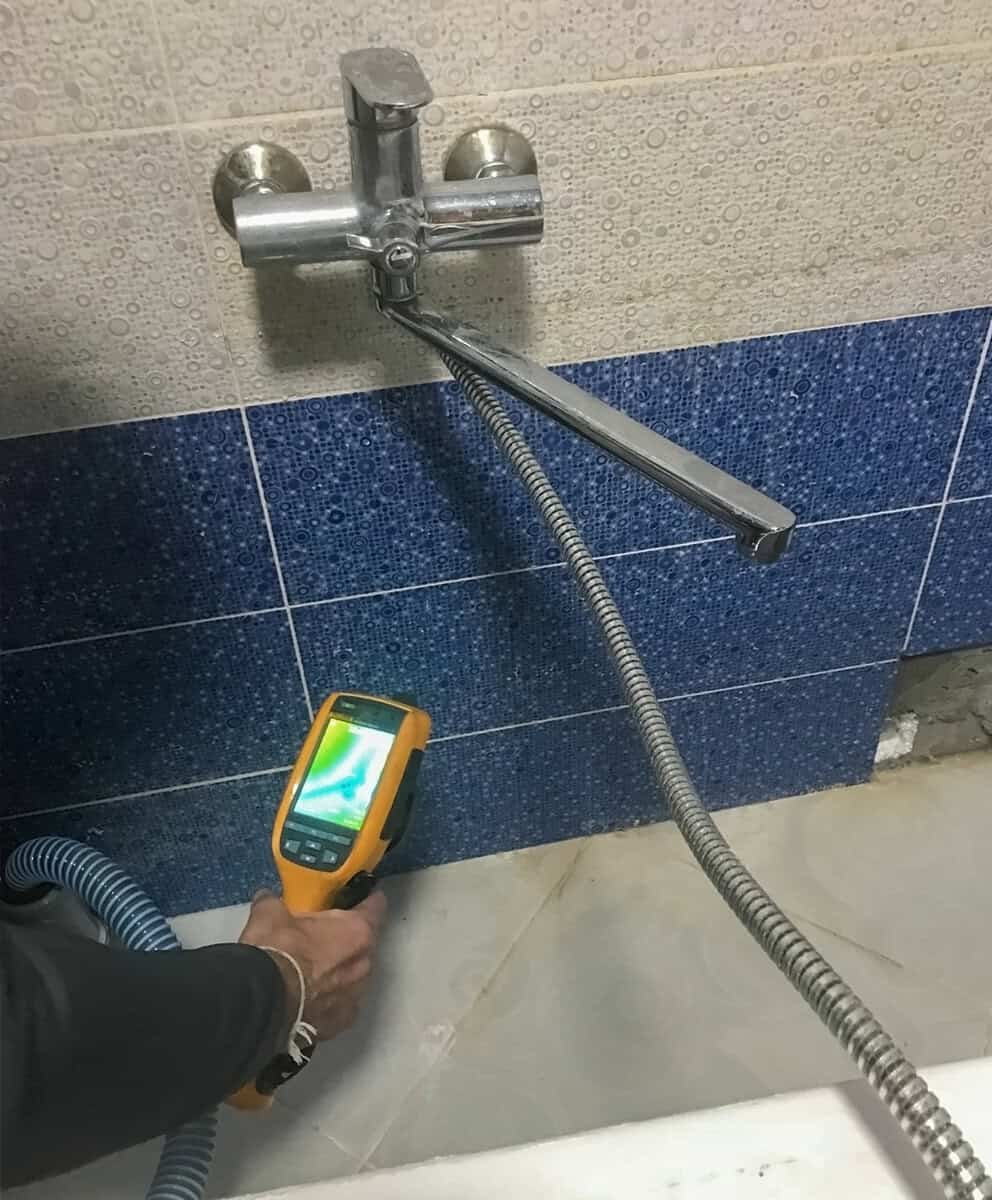
- Arrange a leak investigation. A plumber can inspect the affected area, nearby fittings and accessible pipework to locate the likely source before any repair work starts.
When to call a plumber
Call a plumber as soon as possible if water is actively escaping, a ceiling is sagging or stained, your water meter is moving when no water is being used, or your boiler pressure keeps dropping. The longer a leak continues, the more likely it is to damage plaster, flooring and timber.
Our leak detection service in Derby starts with you telling us what you have noticed. A local plumber will then inspect the affected area and accessible pipework, explain what we have found and talk you through the repair options. Where the repair is within our plumbing scope, we can complete the agreed work for you.
Frequently asked questions
Can a small leak really cause much damage?
Yes. A slow drip behind a wall or under a floor can go unnoticed for a long time, soaking plaster, timber and insulation and encouraging mould. Small leaks are usually quicker and cheaper to deal with when they are found early.
Is a damp patch always caused by a leaking pipe?
Not always. Damp patches can also be caused by condensation, rainwater getting in from outside or problems with guttering. If the patch is near pipework, a bathroom or a radiator, or your water meter is moving when no water is used, a plumbing leak is more likely.
Why does my boiler pressure keep dropping if I cannot see a leak?
Water can escape from heating pipework under floors, from a radiator valve or from a component inside the boiler. Any work inside the boiler must be carried out by a Gas Safe registered engineer, so if you suspect the boiler itself, arrange a boiler repair.
Worried about a leak in your Derby home?
If you have noticed damp, staining, falling pressure or a water meter that will not stop moving, Home Heating Experts can help find the source. Call us on 07990 755180 or request a quote online and tell us what you have noticed.